Find Your Configuration
Fill in any three fields and we'll suggest the fourth
These are starting points, not rules. Every axeman finds their own fit — reach out if you want to talk it through before you order.


Reliable shipping
Flexible returns
From 1866 to 1919, John Beamesdorfer Stohler made axes in a rickety frame shack in Schaefferstown, Pennsylvania. His axes cost more than twice what factory axes cost. People paid it anyway. Then they waited in line for more.
These were the days of the American chestnut, before chainsaws. You lived by your axe and a crosscut saw if you had one. Tools had to work — your survival depended on it.
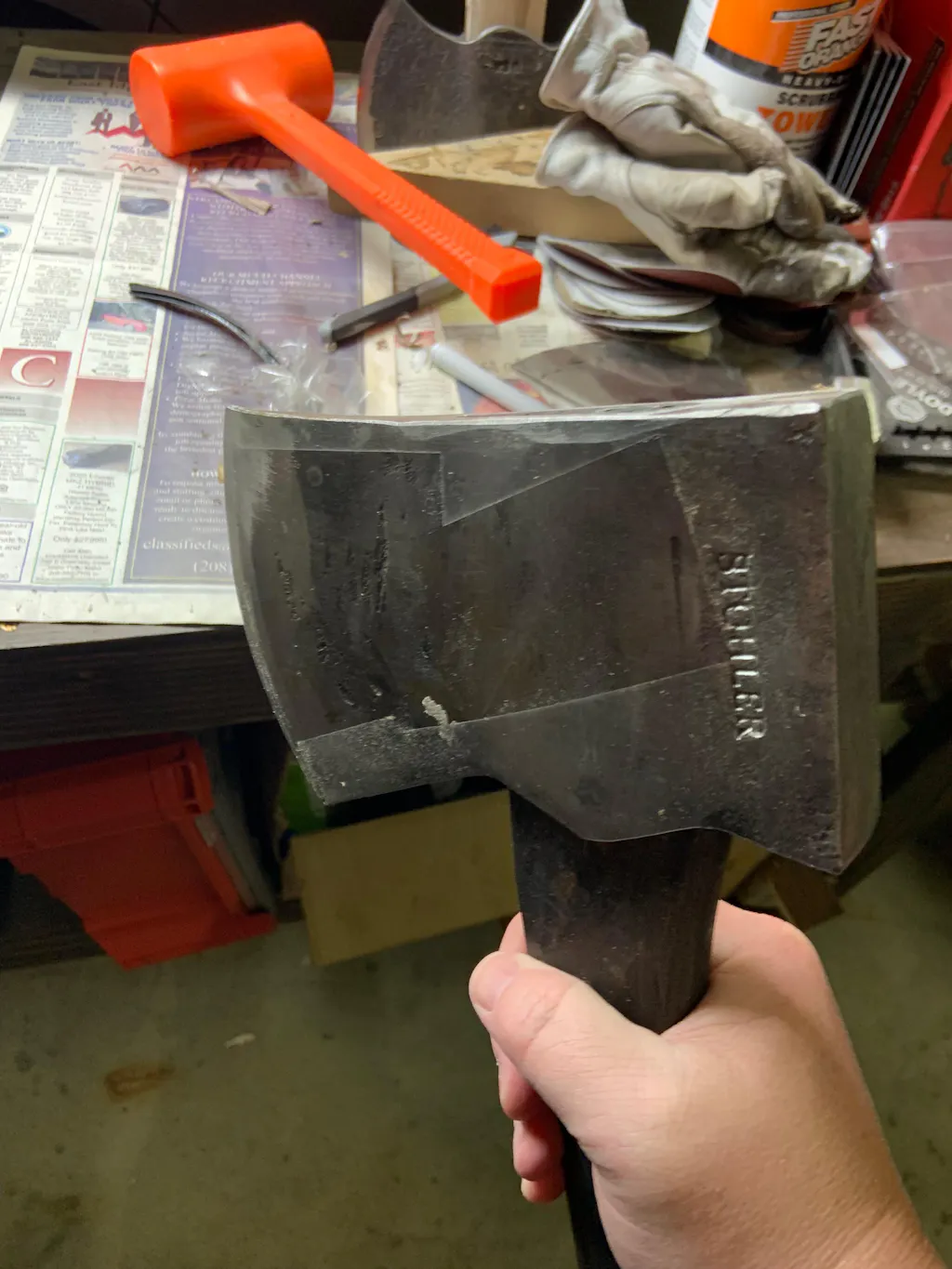
The geometry. That convex blade profile and deep poll created perfect balance in a way that working men recognized the first time they swung one.
The convex blade entered the cut and pushed fibres apart rather than wedging into them — chips popped out cleanly and the axe kept moving. A factory axe binds. You lose time pulling it from the cut. With the Stohler, the cut cleared itself.
Then there was the poll. Deep. Substantial. A heavy head without a poll wants to dive forward in the hand — you fight it on every horizontal cut, gripping harder, bleeding grip strength into controlling the blade you should be putting into the work. The Stohler's deep poll is the counterweight that ends that fight. Balanced. Less grip strength required on horizontal cuts. The axe sits nimble and responsive in the hand, goes where you aim it, and tires you out less doing it.
His crucible steel held an edge through a full day's work when factory edges were already dull. When everyone else was struggling with axes that didn't hold up, the Stohler did.
Demand exceeded his supply for 50 years. That doesn't happen with mediocre tools. Born of necessity, designed to perfection for the hard work they had to do.
We studied original Stohlers — measured the angles, traced the convex blade, analyzed why the poll puts the balance exactly where it needs to be. Then we recreated it using traditional hand-forging methods.
Every STOHLER starts as 4340 steel. The convex blade geometry is forged in, not ground. The deep poll is forged in the same fire. Our 4340 tool steel holds an edge as well or better than Stohler's original crucible steel — but it's the geometry, that balance and blade profile, that makes this axe what it is.
We make a tribute in our small family run forge — to what that smith built in that shack in Schaefferstown, and to every wood chopper who ever swung his pattern and nodded quietly at how right it felt. The hope is simple: that our customers enjoy this axe the same way the old woodchoppers valued their Stohlers.
Customization options:
The STOHLER's profile is instantly recognizable — that distinctive convex blade and deep poll. Collectors pay premium for 100+ year old originals, then lock them away. They're too valuable to risk using.
That's why people come to us. Ours is made for using, not collecting. Whether you're felling hardwoods or splitting winter's wood, this is the pattern that proved itself for half a century without marketing.
Performance earned the reputation.
Hand-forged to order. 5–8 weeks delivery. FREE SHIPPING to USA and Canada. International orders: flat $25 USD.
Q: Who was J.B. Stohler? A: John Beamesdorfer Stohler (1841–1920) made axes by hand in Schaefferstown, Pennsylvania for over fifty years. He learned the trade in his father's blacksmith shop and paid close attention to what working men said they needed. His axes sold for more than twice the factory price. Demand was always higher than supply. Original Stohlers still command premium prices at auction today.
Q: What is the convex grind and why does it matter? A: The convex blade pushes wood fibres apart as it enters the cut rather than binding against them — chips pop free cleanly and the axe keeps moving. You feel it on the first stroke. You don't forget it.
Q: What does the poll actually do? A: The deep poll acts as a counterweight to the head. Without it, a heavy axe wants to dive forward — you fight the tool on every horizontal cut. The Stohler's poll neutralizes that. Less grip strength, less fatigue, better accuracy. That's why the men who used them wouldn't go back to anything else.
Q: What is Aqua Fortis? A: A 19th-century finishing technique using ferric nitrate. Gives hickory a deep reddish-brown that darkens with age and use — the way handles came out of Stohler's own workshop.
Q: Warranty? A: Lifetime craftsmanship guarantee. If it fails due to our workmanship, we make it right.
Hand-forged in Ontario, Canada — a pattern that earned its legend in a rickety shack in Pennsylvania, and is earning it again.
Fill in any three fields and we'll suggest the fourth
These are starting points, not rules. Every axeman finds their own fit — reach out if you want to talk it through before you order.